- Decode with Adrija
- Posts
- Is Social Media The Real Villain In Children’s Lives?
Is Social Media The Real Villain In Children’s Lives?
A ban feels comforting, but the evidence tells a messier story.

Adrija Bose
February 11, 2026 • Estimated Reading Time: 6 minutes
In partnership with

On the morning of February 4, three sisters — Nishika, 16, Prachi, 14, and Pakhi, 12 — were found dead outside their ninth-floor apartment in Ghaziabad's Bharat City housing complex. They had jumped, one after the other, before 2 a.m. They left behind an eight-page note, some of it written in Korean. The walls were etched with messages. Their room, police found out, was their entire world.
Within hours, the story had been assigned a villain: a Korean task-based online game, possibly structured like the notorious Blue Whale challenge, with 50 escalating tasks and a final one. Calls to ban the game, ban social media, ban the internet for children flooded in. The girls' grandfather pleaded with the government on camera. "I fold my hands before the government and request that the game be banned so that no more such deaths or suicides happen."
That grief is real, and it deserves to be taken seriously. What doesn't deserve to go unquestioned is the policy leap that followed — from a tragedy to a ban, in one news cycle.
I am not a parent, so I don’t speak from parental panic. But I have reported on technology, children, and platforms long enough to know that while harm is real, the impulse to ban is often an easy deflection rather than a serious solution.

The Story The Game Doesn't Explain
As investigators dug deeper into the case, a more layered picture emerged, and it stopped fitting neatly into a "gaming addiction" headline.
The girls' father had married two sisters. The family carried significant financial debt. The brother had a disability, adding to the household strain. The girls had reportedly been out of school for nearly three years. The walls of their room said things like: "I am very, very alone." They had tried to start a social media account using their Korean alter-egos and had been quietly building a following before their phones were confiscated. Then their father sold the phones to pay electricity bills.
Were they addicted to a game? Possibly. But they were also isolated, educationally excluded, living in economic precarity, and possibly experiencing violence at home.
To reduce all of that to "social media made them do it" doesn’t explain the tragedy. It simply allows everything else in that room to escape accountability.
What The Research Actually Says
The Ghaziabad case has been folded into a much larger debate that India was already having.
The Economic Survey 2025–26 flagged digital addiction, compulsive scrolling, and rising anxiety among teens, and argued for age-based access limits and stronger platform responsibility.
Globally, governments are moving in the same direction. Australia enacted the world's first nationwide under-16 social media ban in December 2025, covering Instagram, TikTok, YouTube, Snapchat and others. Spain is following. The UK is exploring an under-16 ban alongside curfews and design changes.
The concern isn't manufactured. Features like infinite scroll and algorithmic reward loops do drive compulsive patterns in vulnerable users. There is evidence linking heavy social media use to anxiety and depression in adolescents, particularly for girls in early-to-mid adolescence and boys in their mid-teens.
Cambridge researcher Amy Orben and her colleagues have spent years mapping this terrain and consistently found that the effects of social media on mental health are real but small, deeply context-dependent, and concentrated among children who are already struggling. The relationship is bidirectional: distressed children often go online more, the causation does not only run the other way.
The UK's Understanding Society longitudinal study, tracking thousands of children from 2009 to 2019, found that screen time alone does not consistently predict later anxiety or depression. Offline stressors and the quality of real-world support matter far more.
This matters because bans assume a simple problem with a simple fix. The evidence does not support that assumption.
Children Adapt. Policy Rarely Keeps Up
Even in Australia, the ban has been messy in practice. Millions of accounts were removed, but teenagers quickly began migrating to adjacent platforms, shared devices, VPNs, or accounts registered under adults. Reddit has challenged the law in the High Court. The country’s own eSafety Commissioner acknowledged that the real impact won't be measurable for years.
At the Safer Internet India summit, Vikash Chourasia, a scientist at the Ministry of Electronics and IT put it plainly: "No, social media should not be banned for children.”
He described tweaking app permissions on his own child's phone, only for the child to switch to a grandparent's device within a week. “Banning won't help; awareness will help.”
Children have always adapted faster than the rules designed to contain them.
Who Actually Gets Protected by a Ban?
There's a class question hiding inside every conversation about digital bans that rarely gets asked out loud.
When Australia removed 4.7 million under-16 accounts, the ban fell equally on a 15-year-old in inner-city Sydney and a first-generation smartphone user in a rural town. But the experience of that ban is wildly unequal. Affluent families can offer supervised alternatives, tutors, private devices, and structured offline activities. Families without those resources lose the connection, not the harm.
A few years ago, Decode reported on Rashi Shinde, an 11-year-old Dalit girl from a low-income family in rural Maharashtra. Her mother began recording her dancing on their terrace and posting the videos online. What followed was unexpected: viral reach, paid collaborations, and financial stability for a family that had struggled with unpaid school fees and precarious work.
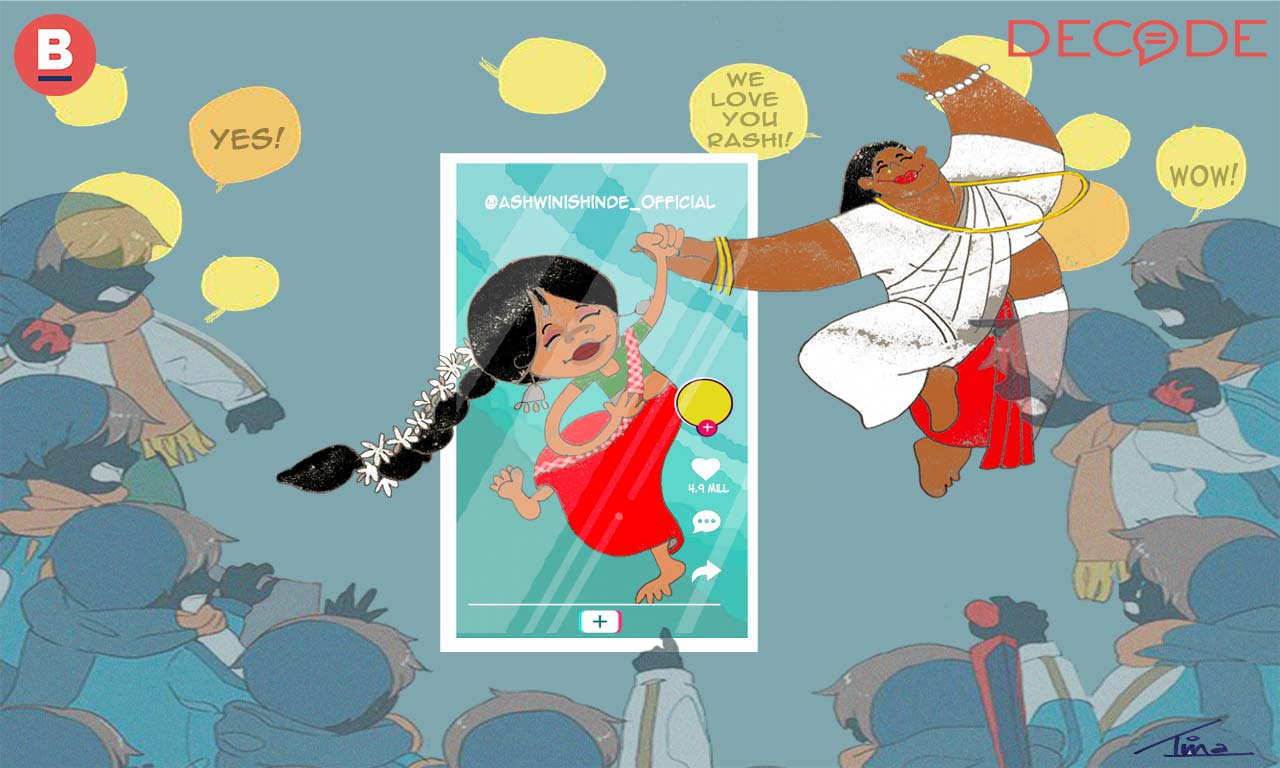
Social media gave Rashi visibility, confidence, and opportunity her offline world had not. It also exposed her to casteist and gendered abuse. Her story illustrates the contradiction at the heart of this debate: digital spaces can both uplift and harm. The answer isn’t to remove access altogether, but to ask why platforms allow abuse to flourish while profiting from children’s labour.
For some children, the internet isn’t a distraction from a good life. It is a substitute for one that has already been narrowed.
UNICEF Australia, which supported the goals behind the ban but opposed its form, said: "Social media has a lot of good things, like education and staying in touch with friends. It's more important to make social media platforms safer and to listen to young people."
Why India Cannot Copy-Paste A Ban
India has repeatedly topped global charts for child sexual abuse material with over 2.3 million reports linked to the country by 2024. Research consistently shows that the children most at risk are those already living with poverty, unstable or violent family environments, and without trusted adults. The same conditions that make disclosure and help-seeking hardest.
Apar Gupta, founder of the Internet Freedom Foundation, argued in The Hindu, that copying Australia’s approach would be particularly damaging in India. Age verification at scale would require linking social media access to government ID, effectively creating a mass surveillance framework. Under the Digital Personal Data Protection Act, this would likely result in false declarations or blanket exclusion rather than genuine protection.
There is also the gender divide: only 33.3% of Indian women have ever used the internet compared to 57.1% of men. In practice, “policing age” often becomes confiscating devices from girls entirely.
And India is not Australia. Australia has near-universal schooling, robust mental health infrastructure, and structured offline alternatives. India does not offer that baseline. A blanket ban here wouldn’t remove a distraction from a stable system, it would remove a bridge from an unequal one.
What Would Actually Help
The alternative isn't inaction; it's finding out the real problems.
Platform design accountability is real and underregulated. Infinite scroll, algorithmic amplification of distressing content, task mechanics designed to keep users engaged past the point of healthy use — these are choices, not natural features of the internet. What's needed, as Apar argues, is a sophisticated menu of legislative tools: a robust digital competition law, legally enforceable duty-of-care obligations toward minors, and an independent expert regulator.
Digital literacy — actual media literacy, not just "be careful online" assemblies — equips young people to navigate platforms critically. Adolescents who understand how algorithmic feeds work and can recognise compulsive design are less vulnerable to its worst effects.
Mental health infrastructure is the most glaring gap. India has roughly 0.07 psychiatrists per 100,000 people. School counsellors are largely absent. Confiscating a phone is not a substitute for someone who can actually hold a child's distress. Banning platforms doesn't ban pain. It just moves it, often somewhere less visible and far harder to heal.
—------------------------------------------------------
In the aftermath of tragedy, the instinct to protect by removing access is understandable. It feels decisive.
But if we ban social media for children under 16, who actually benefits? Not the child who found their people online when no one offline was looking. Not the kid in a small town with no one to talk to. Not the teenager whose school doesn't have a counsellor. Not the girl who writes her name in Korean on her wall because it's the only identity she's ever fully inhabited.
These debates deserve more than fear-driven headlines. They deserve the same care the research asks for: Slow, contextual, and honest about what bans can and cannot fix.
Some solutions are harder to legislate. That's exactly why they matter more.
If you need help or want to report a concern:
Mental health support: iCall — 9152987821 | Vandrevala Foundation — 1860-2662-345 (24/7)
Report child sexual abuse material online: Rati Foundation’s Meri Trustline – 636317636
On My Bookmarks
 Gif by SandiaLabs on Giphy | AI RiskExperts from 30 countries detailed the dangers of powerful AI systems that rival human skills in reasoning or even designing bioweapons in this International AI Safety report. No global safety rules exist yet. It called for urgent standards, openness, and controls – like the climate IPCC report, but for AI. |
 Gif by mostexpensivest on Giphy | Surveillance OverreachNew York Times has a story on how Britain authorities are sharply expanding digital surveillance, ramping up the use of facial recognition and internet regulation to address crime and online and real-world safety. However, many critics argue that the nation has gone too far, intruding on citizens' daily lives with too many regulations. |
 Gif by youtube on Giphy | YouTube Mob MastersTwo expatriate influencers– Pinaki Bhattacharya and Elias Hossain– had waged a relentless online campaign against Bangladesh's most prominent media houses, systematically targetting their credibility and painting them as enemies of the people. They instigated and organised a series of mob attacks on political and media institutions through Facebook and YouTube. This is our latest Decode investigation, ICYMI. |
Got a story to share or something interesting from your social media feed? Drop me a line, and I might highlight it in my next newsletter.
See you in your inbox, every other Wednesday at 12 pm!
MESSAGE FROM OUR SPONSOR
How can AI power your income?

Ready to transform artificial intelligence from a buzzword into your personal revenue generator
HubSpot’s groundbreaking guide "200+ AI-Powered Income Ideas" is your gateway to financial innovation in the digital age.
Inside you'll discover:
A curated collection of 200+ profitable opportunities spanning content creation, e-commerce, gaming, and emerging digital markets—each vetted for real-world potential
Step-by-step implementation guides designed for beginners, making AI accessible regardless of your technical background
Cutting-edge strategies aligned with current market trends, ensuring your ventures stay ahead of the curve
Download your guide today and unlock a future where artificial intelligence powers your success. Your next income stream is waiting.
Was this email forwarded to you? Subscribe